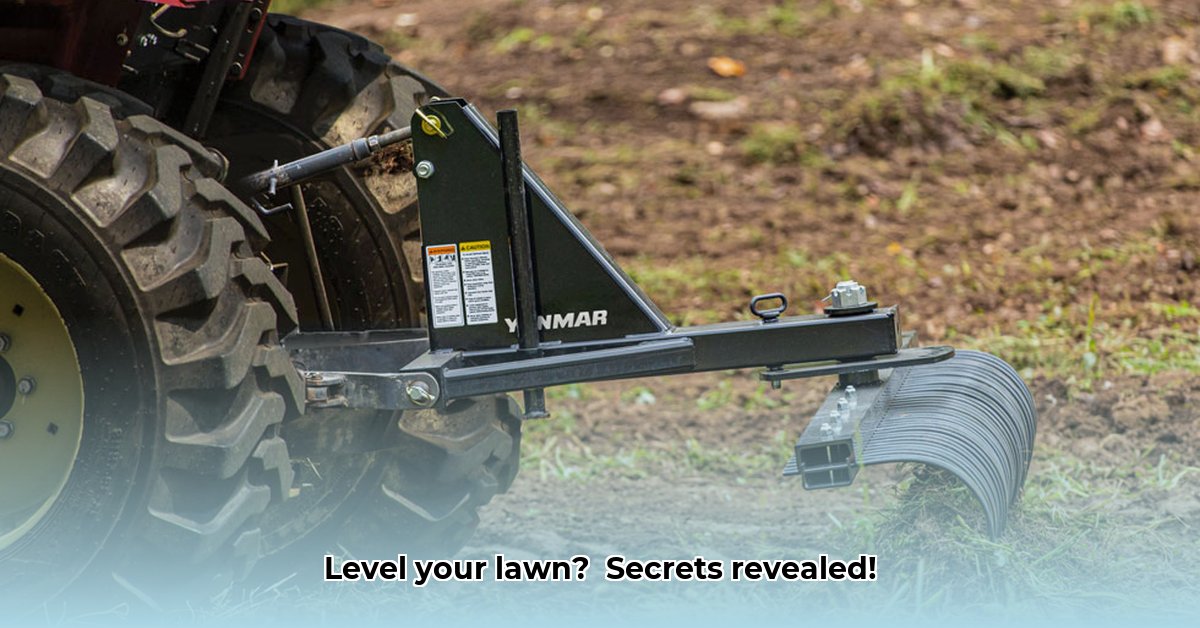
Tractor Leveling Rakes: Level Up Your Landscaping Game
Achieving a perfectly smooth lawn goes beyond simple mowing; it requires proper groundwork. Tractor leveling rakes are essential tools for this task, handling everything from subtle undulations to significant leveling projects. While often associated with large farms, these versatile tools are increasingly popular among homeowners seeking a pristine landscape. This guide will navigate you through selecting, using, and maintaining a leveling rake, while also considering their environmental impact. We'll explore different types, highlight key features, and offer practical advice to ensure a perfectly level, healthy, and sustainable lawn. For more on tractor types, see this helpful guide on tractor selection.
Types and Features of Tractor Leveling Rakes: Finding the Right Fit
Tractor leveling rakes are primarily constructed from steel, chosen for its durability and longevity. However, the size and features vary significantly. The working width, measured in feet, is a key factor determining efficiency. A larger rake might cover more ground faster but may sacrifice maneuverability in tight spaces. Smaller rakes offer better precision for detailed work. Adjustable tines (the teeth of the rake) are another crucial feature, allowing you to customize the depth of penetration and adapt to different soil types. Hard-packed clay soil, for instance, requires a different approach than loose, sandy soil.
Here's a comparison illustrating these differences:
| Feature | Smaller Rake | Larger Rake |
|---|---|---|
| Working Width | Typically 4-6 feet | Often 8-12 feet or more |
| Maneuverability | Excellent, good for tight spaces | Less nimble, better for open areas |
| Efficiency | Slower, more precise work | Faster coverage, less precise |
| Best For | Smaller yards, detailed leveling | Large areas, quick ground smoothing |
Choosing the right size depends on your yard's dimensions and the intricacy of the leveling task. A smaller rake is ideal for smaller yards or intricate leveling, while a larger rake significantly increases efficiency for larger areas.
Choosing Your Tractor Leveling Rake: Making the Right Choice
Selecting a leveling rake is about finding the right tool for your specific needs. Consider these crucial questions:
- Project Scale: What area requires leveling? A small patch versus an entire field necessitates different rake sizes and power sources.
- Soil Type: Hard-packed clay demands more robust tines than loose sandy soil. This impacts the strength and type of tines needed.
- Budget: Rakes vary in price based on size, features, and materials. Establishing a budget helps prevent impulse purchases.
By carefully weighing these factors, you can avoid overspending and invest in a rake optimally suited for your project.
Mastering Your Tractor Leveling Rake: A Step-by-Step Guide
Proper usage ensures optimal performance and extends the lifespan of your rake. Follow these steps:
- Pre-Operation Inspection: Examine the rake for any loose parts, bent tines, or damage before starting.
- Area Preparation: Remove any large debris (rocks, sticks) to prevent damage to the rake and ensure even leveling.
- Tine Adjustment: Set the tines to an appropriate depth, starting shallow and adjusting as needed to prevent over-digging.
- Consistent Operation: Maintain a steady speed to prevent uneven results and potential damage to the rake.
- Post-Use Cleaning: Thoroughly clean the rake to remove mud and debris, preventing rust and extending its lifespan.
- Maintenance: Regularly lubricate moving parts and store the rake in a dry location to protect it from the elements.
Sustainability Considerations: Leveling Up Your Eco-Consciousness
Sustainable landscaping extends to the tools we use. While steel rakes are durable, minimizing the need for frequent replacements, we must consider the environmental impact of steel production. Look for manufacturers who utilize recycled steel and employ environmentally friendly coatings. Choosing a durable rake promotes sustainability by reducing the need for frequent replacements, thereby minimizing waste. Proper disposal at the end of its lifecycle is equally crucial.
“Choosing durable, sustainable landscaping tools is an investment in environmental responsibility,” says Dr. Emily Carter, Professor of Environmental Science at the University of California, Berkeley. "Consider the entire lifecycle, from sourcing materials to responsible disposal, when you make this choice."
Final Thoughts: Reap the Rewards of a Level Lawn
Investing in a high-quality tractor leveling rake provides numerous benefits. Careful consideration of size, material, and features, combined with proper use and maintenance, ensures a level lawn and promotes sustainable landscaping practices. The result? A healthy, beautiful lawn that enhances your property's aesthetic appeal while minimizing your environmental footprint. Remember, a well-maintained rake is a key to long-term landscaping success.